Growth Decisions
Part of Testing acquisition demand for a new DTC brand
Setting a first-customer acquisition hypothesis for a DTC launch
Write a testable first-customer acquisition hypothesis with a defined buyer, route, action, spending limit and decision rule.
A first-customer acquisition hypothesis predicts who will respond to one route and message, what action they will take, and what result will change your next decision. Write it before launching activity, so a click or sign-up cannot later be recast as proof of customer acquisition.
Write a prediction that can fail
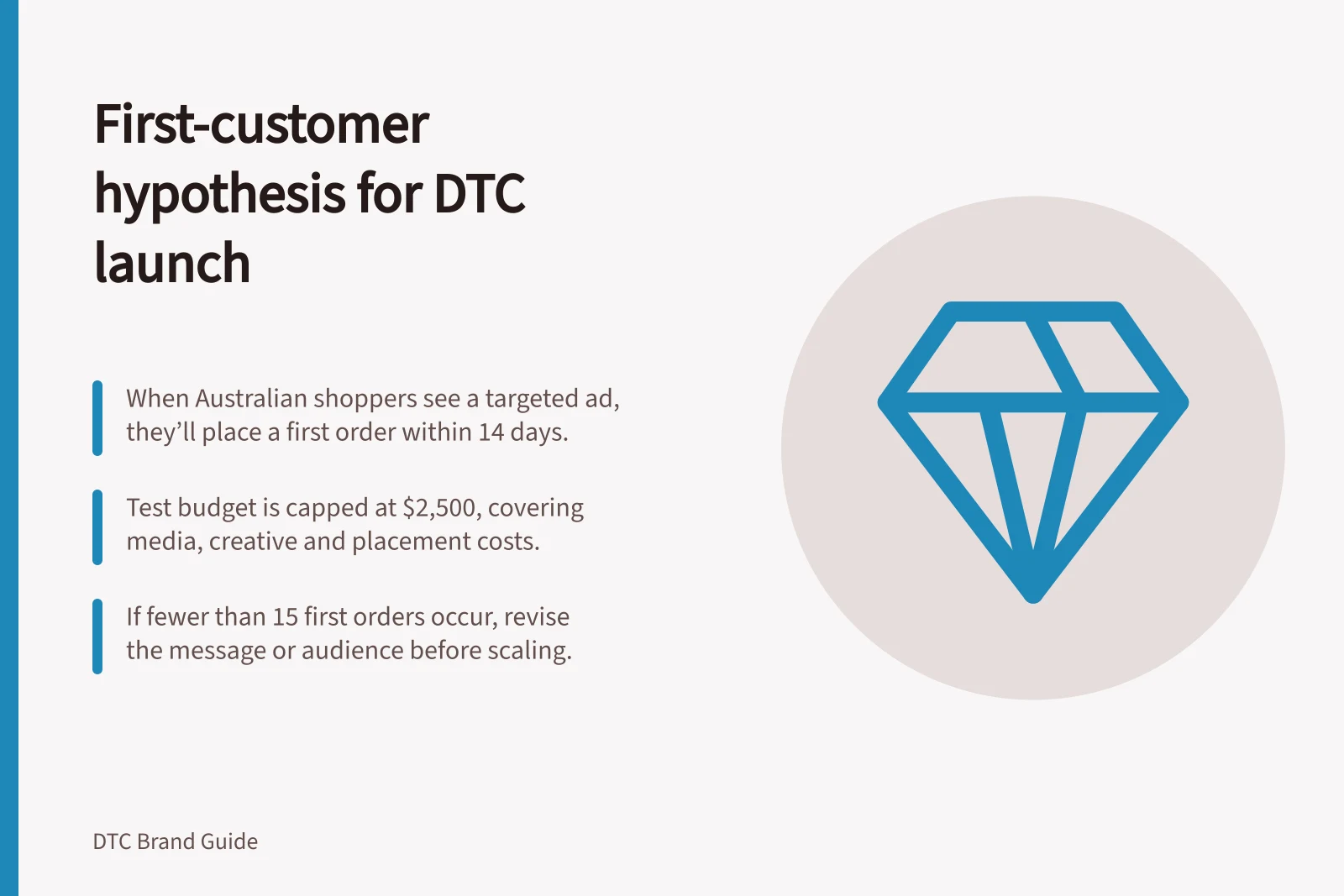
Use this working form: When [specific buyer] encounters [message] through [route] in [purchase situation], they will [observable action] on [stated offer] within [test period and spending limit]. We will continue, revise or stop according to [decision rule].
Define the buyer by a relevant situation rather than a broad demographic. State why the route might reach someone at that moment; a popular platform alone is not a reason.
Specify a completed first order as the main action if the product is available for purchase. If it is not ready, name the action honestly as an enquiry or expression of interest. Do not use the two actions interchangeably when reporting the result.
Fix the conditions before observing the result
Record the audience, placement or recruitment method, message, page, product version, price, delivery conditions, period and budget. Keep a copy of what a buyer saw. If a material condition changes, start a new line in the record rather than combining the results under one hypothesis.
Set a spending rule using the expected first order and the brand's cash needs. The detailed calculation belongs in the unit-economics work; this hypothesis should state the resulting limit and which costs count. Include relevant media, creative and placement costs on a consistent basis. If there is no defensible limit yet, calculate one before calling the test economically successful.
Key Metrics to Track in a DTC Acquisition Test
- Reach
- Number of unique Australians exposed to the message
- Conversion rate
- Percentage of visitors who made a first purchase
- Cost per acquisition (CPA)
- Total spend divided by number of first-time customers
- First-order value
- Average revenue from a new customer’s initial purchase
Name the alternatives
Write at least one other explanation for each possible result. If people visit but do not order, they may be the wrong audience, misunderstand the message, reject the offer or encounter a purchase-path problem. If orders arrive, some buyers may have purchased without the campaign. An advertising platform's conversion count attributes actions under its settings; it does not establish how many additional customers the activity created.
Decide what to inspect: order records for first-time customers, shopper questions, page and checkout events, and changes in stock or delivery promise. Use a comparison group or period only when it is sufficiently comparable for the question; a convenient comparison is not automatically a valid control.
Turn the result into one next decision
Report the conditions and observed actions together. If relevant people were scarcely reached, revise the route before rewriting the product. If they engaged but misunderstood the item, examine the message and page. If first orders arrived above the spending limit, sales alone do not support the hypothesis.
A limited test can justify a sharper follow-up hypothesis. It cannot promise the same acquisition cost when the audience or spend expands. Record what remains uncertain and change one important assumption at a time where practical.