Brand Positioning
Choosing a complementary brand for a joint product
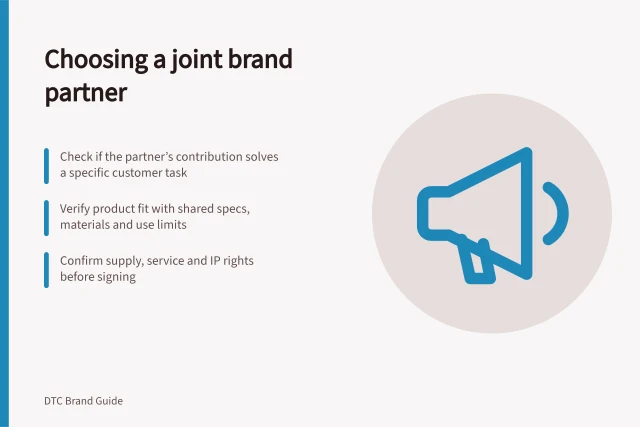
Compare potential co-brand partners on customer benefit, product fit, supply, claims and service before committing to a joint product.

Section
Brand Positioning
Compare potential co-brand partners on customer benefit, product fit, supply, claims and service before committing to a joint product.
Brand Positioning
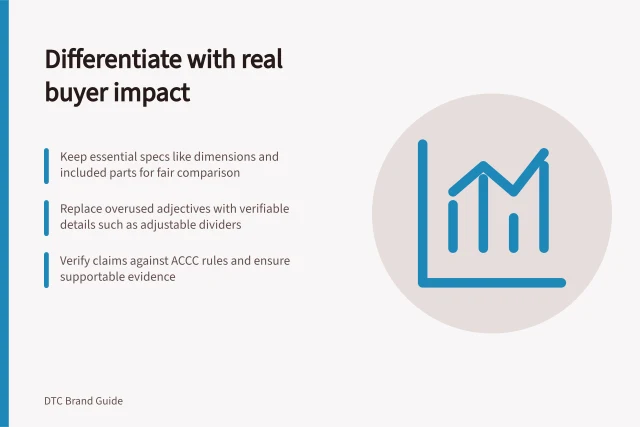
Audit competing offers, preserve details buyers need and select a distinctive brand angle that your product can support.
Brand Positioning
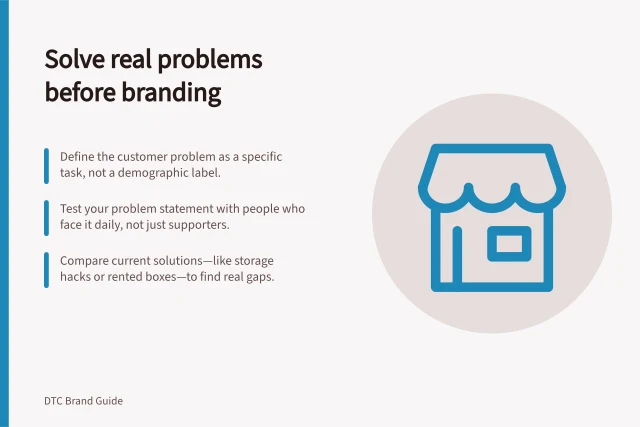
Use buyer situations, interviews and alternatives to write a testable customer problem before deciding how a DTC brand should look or sound.
Brand Positioning
Define a DTC brand position around a buyer, purchase problem, credible difference and supportable product promise.
Brand Positioning
Direct-to-consumer product storytelling should help someone decide whether an item suits them.
Brand Positioning
A materials claim is most useful when it tells a shopper what a product contains and why that choice matters in use.
Brand Positioning
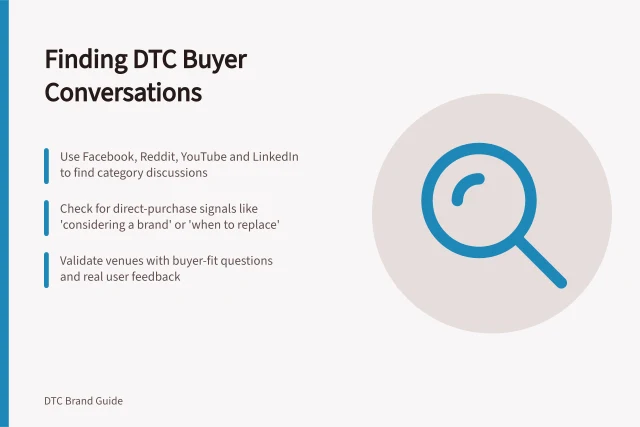
Find category conversations, identify purchase questions and shortlist places worth investigating for a new DTC brand.
Brand Positioning
Plan an Australian DTC launch around customer evidence, a focused offer, workable order economics and a store that can meet its promises.
Brand Positioning
A product page should tell a buyer what the item is designed to do and where that promise stops.
Brand Positioning
Move from customer observations to a clear, bounded product promise that the item and its evidence can support.
Brand Positioning
A founder story can explain why a product exists, but it is not evidence that the product performs as promised.
Brand Positioning
Check a product claim’s wording, evidence, scope and overall impression before using it in DTC copy.