Product Assortment
Building bundles that solve a customer need
Choose bundle contents from a customer task, check compatibility and component stock, and describe the complete set accurately.

Section
Product Assortment
Choose bundle contents from a customer task, check compatibility and component stock, and describe the complete set accurately.
Product Assortment
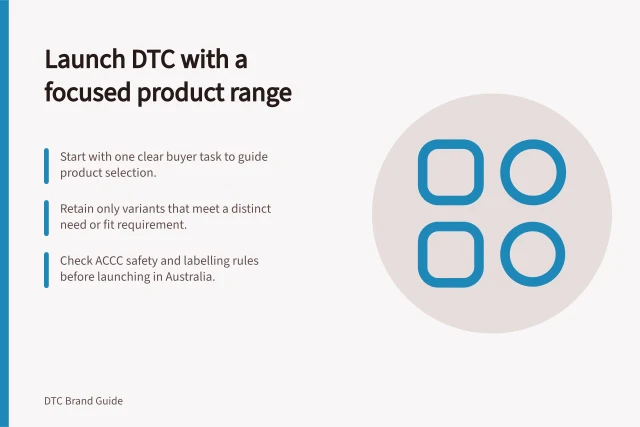
Decide which products and variants belong in a first DTC range by checking buyer fit, supply, costs and the work each stock line creates.
Product Assortment
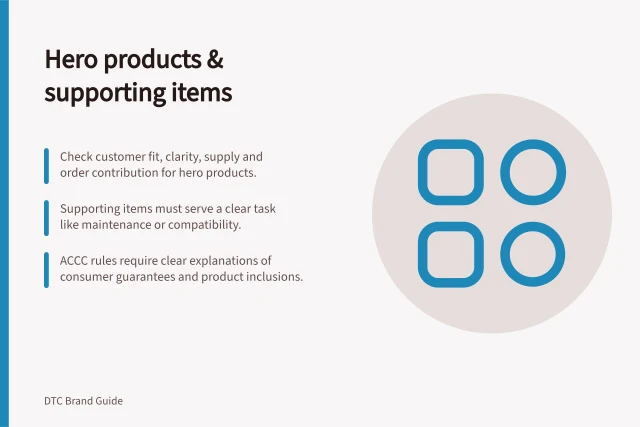
Assess a DTC hero product for customer fit, clarity and deliverability, then choose supporting items with a defined use.
Product Assortment
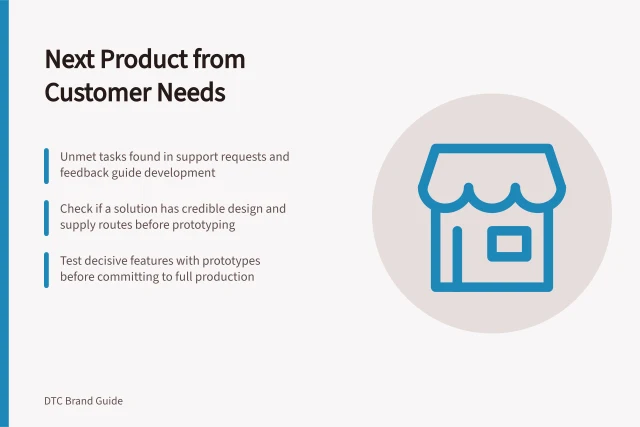
Find an unmet customer task, compare product opportunities and choose one idea for the next development check.
Product Assortment
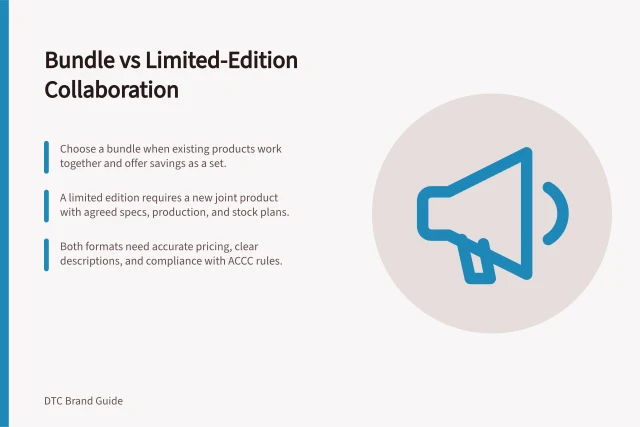
Compare a joint bundle with a distinct limited-edition product on customer benefit, stock risk, product work and operating commitments.
Product Assortment
Use clear reasons to stop or defer a proposed DTC product when its need, design, supply route or promise remains unresolved.
Product Assortment
Specify the product, contents, price, availability and delivery terms a first-time buyer needs to judge a new brand's offer.
Product Assortment
Give every DTC product a clear role, assess buyer choice alongside stock and order costs, and decide what to keep, improve or retire.
Product Assortment
Develop a DTC product through customer research, prototype use, production checks and a measured decision about supplying more.
Product Assortment
Prepare a concise retail buyer case, accurate item records and a controlled product-data handover for an Australian DTC brand.
Product Assortment
Review difficult products for customer value and operating work, then simplify or retire them while accounting for existing orders.
Product Assortment
A bundle is useful when the items work together and the customer can understand what they are buying.