Product Assortment
Part of DTC product development
Deciding when not to expand the range
Use clear reasons to stop or defer a proposed DTC product when its need, design, supply route or promise remains unresolved.
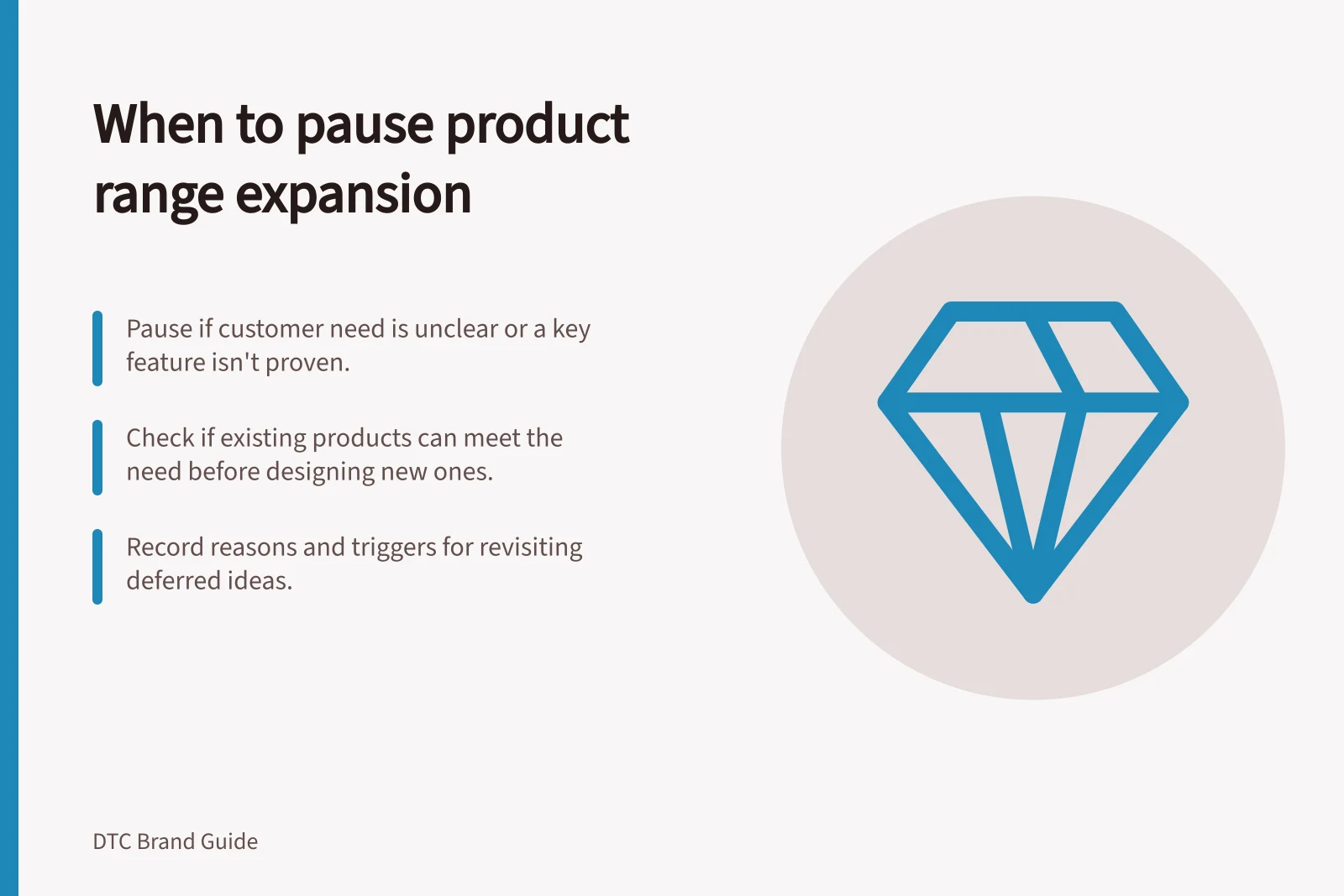
Pause a proposed range addition when customer need is unclear, a vital feature remains unproved, or the business cannot yet make and support the item on workable terms. Record the reason and the evidence that would make the idea worth revisiting.
Challenge the reason to add it
A request, competitor launch or supplier sample can suggest an opportunity. None alone shows intended buyers have an unmet task. Ask who would use the item, what they use instead and why an existing product cannot meet the need. If the case is only that the catalogue needs more choice, investigate the purchase situation first.
A complaint does not always require a new product. A fit complaint, for instance, may call for clearer measurements or a revision to an existing item. Check the customer's account and the current specification before commissioning a separate design.
Use a stop check before committing
Reason to pause / Next useful check
- The need is poorly defined
- Ask relevant buyers about recent choices and alternatives.
- The item repeats an existing use
- Test whether a fit or function difference matters.
- A crucial feature works only in a rough sample
- Check the intended materials and construction.
- Supplier terms require too much stock or cash
- Seek a staged route or reassess the commitment.
- Requirements or public claims cannot be supported
- Identify the exact requirement or narrow the proposed use.
- The team cannot explain or support the item
- Resolve the product record and service questions.
These are reasons to investigate or defer, not automatic rejection rules. A replacement part may matter to current owners even if it attracts few first purchases. Judge the need it serves, not only likely sales frequency.
Compare the next check with the work it displaces
Developing an item uses design time, supplier attention, samples, stock money and support capacity. Record which existing product problem would wait while that work proceeds. If customers struggle with a fault or unclear use, fixing it may be more urgent.
This is a decision about an uncommitted item; retiring a product already on sale requires a different review.
Choose the smallest credible check that could settle the main uncertainty: a buyer conversation, measurement of the current item, a revised prototype or a supplier quote. State what result would restart the proposal. If no feasible check can resolve the important uncertainty within the available commitment, defer it.
Record the outcome
Choose proceed to the next check, defer with a trigger, or stop with a reason. Record the intended buyer, current alternative, evidence, unresolved risks and decision owner. Revisit a deferred idea when the customer need, existing product or supply route materially changes.