Customer Feedback
Part of DTC customer feedback
Feeding return reasons into product development
Capture return reasons with product-version context, investigate patterns and turn evidence into a focused revision brief.
Return reasons can guide revisions to an existing product when the brand keeps the customer's explanation, the product version and the return outcome together. Treat a reason code as the start of an investigation, not a diagnosis. Resolve the customer's return first, then use the records to identify a change worth checking.
Capture the reason without losing the account
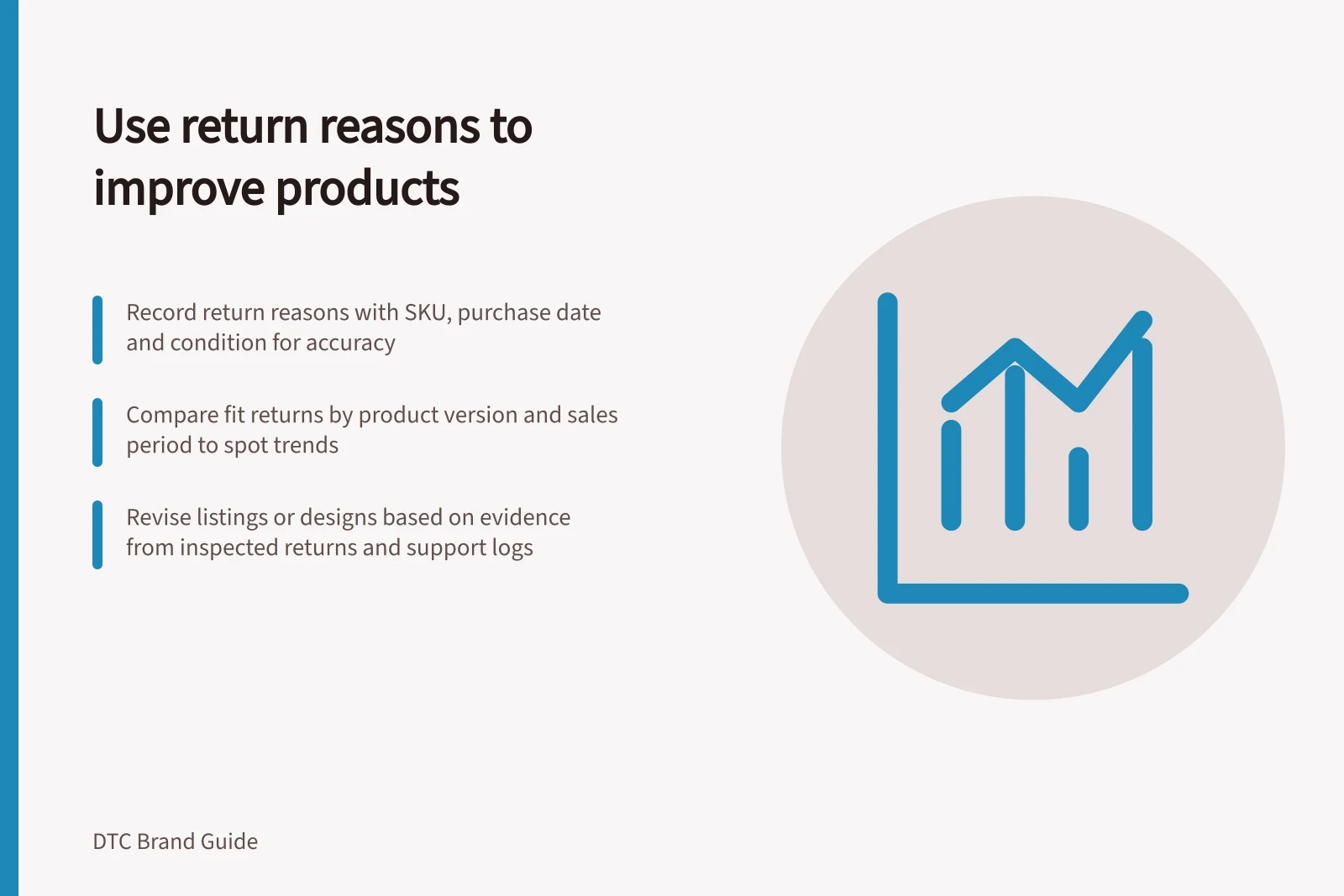
Offer a short set of reasons that customers can understand, such as damaged on arrival, fit, performance, different from description or changed preference. Let them add their own words and choose more than one issue if needed. Record the SKU, variant, batch or revision when known, purchase date, return date, condition and whether the item was inspected.
Keep the customer's selected reason separate from an internal finding. Someone may select “too small” because the listed measurements were wrong, because they chose an unsuitable size, or because the finished item differs from its stated specification. Those possibilities imply different actions. Preserve the original wording even if the team later assigns a more precise cause.
Compare like with like
Review reasons by product version and sales period. A raw count of “fit” returns means little without knowing how many of that version were sold and how many returns supplied a reason. Watch for missing reason data and changing return processes; a new dropdown option can make a category appear to grow even when the underlying experience has not changed.
Read cases behind each notable pattern. Check support conversations, product records and inspected returns where available. Separate delivery damage from an item that fails in normal use. Flag a possible safety issue for prompt assessment rather than waiting for enough returns to form a trend.
Turn a pattern into a revision brief
A useful brief names the product and version, the customer task, the observed issue, the supporting cases, competing explanations and the change proposed. Give it an owner and state what evidence would change the decision.
Possible actions include checking production tolerances, altering a component, changing a size specification or improving an instruction. If the evidence points to an inaccurate listing, correct that claim promptly; a manufacturing change may not be the answer.
For example, if returns for a storage pouch say that a device does not fit, check the device dimensions customers used, the pouch's measured opening, the listing and the relevant production runs. That evidence can show whether the description, the product or both need revision.
From Return Reason to Product Revision
- Capture return reason with context (SKU, date, condition)
- Compare like with like across versions and time periods
- Investigate root causelisting error, design flaw, or manufacturing variance?
- Draft a revision brief with evidence and proposed action
- Test the next version with defined inspection criteria
Check the next version honestly
Record the revision date and first affected batch where available so later reports can be compared with the earlier version. Define what you will inspect or measure before release. After launch, compare equivalent use periods and reason completeness; do not call the change successful because a few later returns omitted the old code.
Keep return handling outside this analysis queue. The ACCC educates businesses about their rights and obligations under the consumer guarantees and can investigate if a business misleads consumers about their rights, but it does not resolve individual disputes or give legal advice about remedies. A product-development project should not delay the handling of an individual customer's return.
![Customers told on product changes: Revised version [version] introduced from [batch or release date] after customer feedback; Confirmed change: [feature] updated to address [issue], with inspection work also contributing; Support contact: [route] for customers to check their item's version and report performance. Telling customers when their feedback led to a product revision](/covers/telling-customers-when-their-feedback-led-to-a-product-revision-640.webp?v=4d228db0)