Customer Feedback
Part of DTC fulfilment decisions
Handling delivery delays without vague customer updates
Give customers specific delivery-delay updates using verified order status, a next action, an update time and appropriate options.
When a delivery is late, tell the customer what is known about their order, what is still being checked, when the next update will arrive and what options are available. A general network-delay notice does not explain whether this parcel has been packed, handed to the carrier or affected by a specific event. Give a new arrival estimate only when there are reasonable grounds for it.
Key compliance considerations from Australian regulators
- ACCC - Supplying paid-for goods
- Businesses must provide accurate delivery information under consumer law
- ACCC - Misleading claims
- Avoid false or misleading delivery estimates; update proactively
- Australia Post - Tracking notifications
- Use verified tracking data to inform customers about delivery progress
Find the last verified event
Check the order record, stock status, packing completion, carrier handover and latest tracking event. Keep those stages separate. A tracking update may reflect information provided before the parcel is physically handed to the carrier, so verify the handover status separately.
If the parcel is still with the brand or its fulfilment partner, say so. If it is in transit, use verified carrier information and follow the relevant enquiry process.
Compare the current position with what the customer was originally told. A delivery window may have passed even if tracking has not flagged an exception. Keep shipping and delivery-time claims accurate, and update customers when a delay arises after purchase.
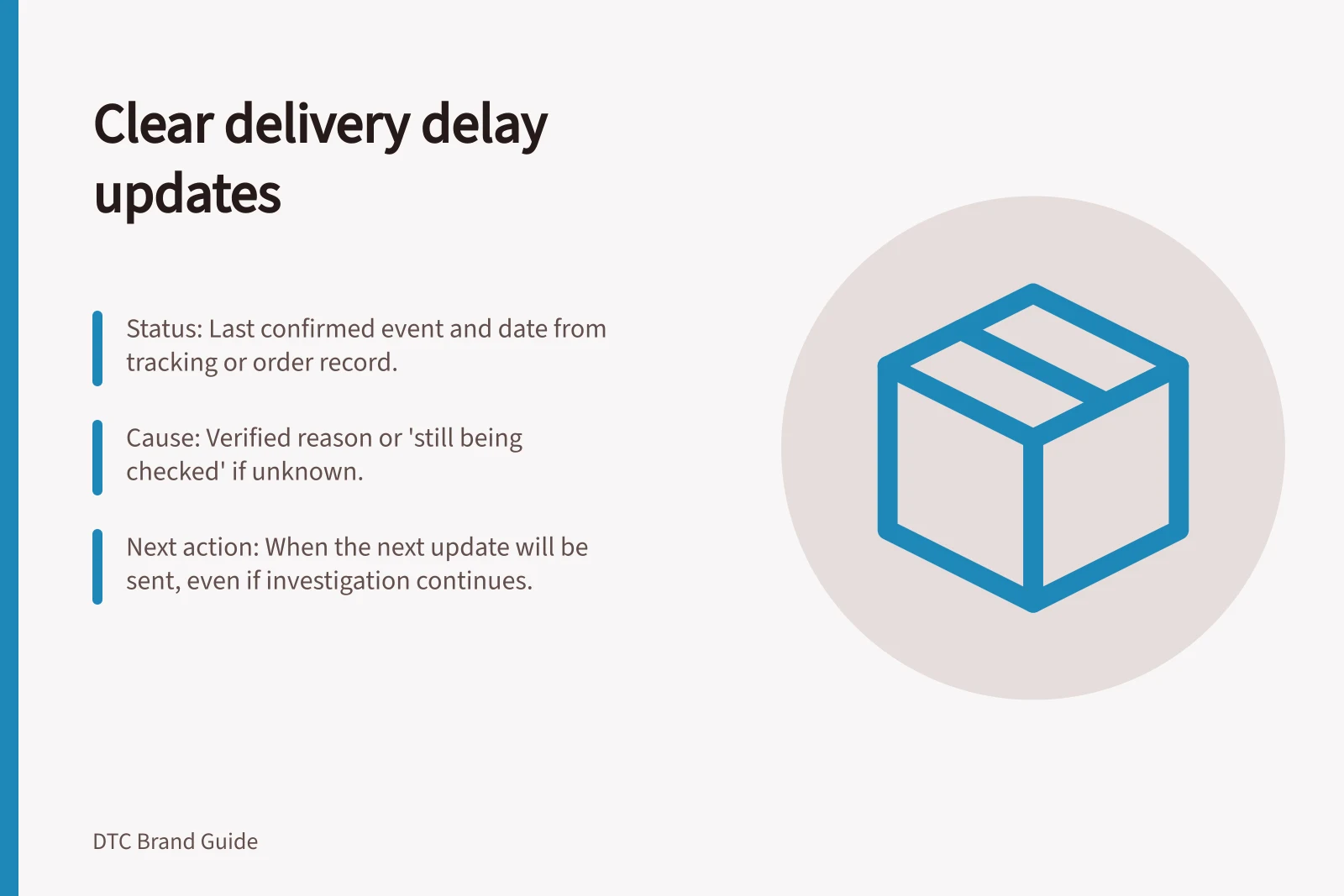
Give four useful pieces of information
A short update should state:
- Status:the last confirmed event and its date.
- Cause:the verified reason, or that it is still being checked.
- Next action:what the business will check and when it will update the customer.
- Options:an appropriate way to resolve or discuss the order, based on its circumstances.
For an illustrative order still awaiting handover: 'Your order has been packed, but it has not yet been handed to the carrier. We are checking the collection and will update you tomorrow afternoon. If this delay causes a problem, please reply so we can discuss your options.' The wording describes a hypothetical order; an actual message needs its own verified status and update time.
If a carrier has accepted the parcel but cannot provide a new arrival estimate, say that plainly. Do not replace an expired date with 'any day now'. Set a next update time even when the investigation may continue beyond it.
Match the response to the circumstances
Consider the customer's situation and available options without waiting for a carrier investigation to finish.
Record who may authorise a resolution and what has been promised. If a replacement is sent, track both parcels so the original's later arrival does not create confusion.
Review the cause of delayed orders: unavailable stock, a missed packing cut-off, missed carrier handover, a transit exception or an inaccurate checkout estimate. Correct the relevant process or customer-facing timeframe while giving each affected customer a specific answer.