Brand Positioning
Launching a direct-to-consumer brand
Plan an Australian DTC launch around customer evidence, a focused offer, workable order economics and a store that can meet its promises.
Launch a direct-to-consumer brand by identifying a specific customer need, choosing a product you can deliver reliably, and checking the numbers before committing heavily to stock. A name and website help people recognise and buy the offer; they cannot establish demand. Use evidence to decide when to make each larger commitment.
Start with a customer and a problem
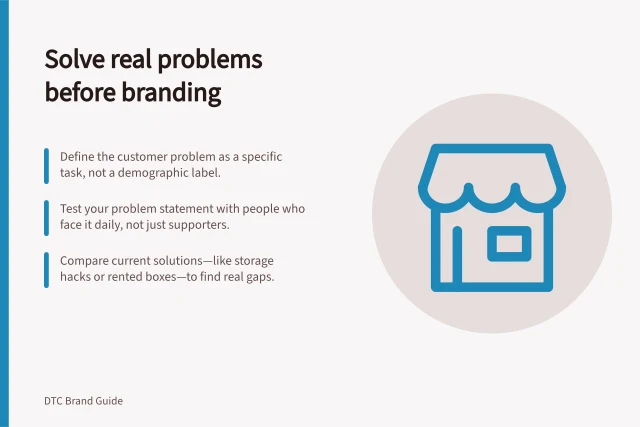
Describe the situation that prompts a purchase. What is the buyer trying to do? What do they use now, what frustrates them and what would make them switch?
Speak with potential buyers, including people who use competing products. Review competing offers and customer feedback to see which needs are already served.
State the proposed product in plain language: who it is for, what it helps them do and under what conditions. If the description depends on a broad label such as “everyone who values quality”, narrow the customer or the problem.
Choose an offer you can explain and fulfil
Select a first range around one purchase decision. Each item or variant should have a reason to exist for the intended buyer. More choices can mean more stock lines, product information and packing decisions. Keep choices that affect whether the product fits or works.
Check the physical product as well as the idea. Ask suppliers about specifications, minimum orders, lead times and how differences from an approved sample will be handled.
Before selling in Australia, identify the safety, information and labelling requirements that apply to the actual product. A general launch checklist cannot determine category-specific obligations.
Test the proposition before a large order
Show intended buyers a concrete offer: what the product does, what is included, its limits, the proposed price and the expected delivery arrangement. Ask what they would otherwise buy. A favourable comment, a sign-up and a paid order are different signals; record which one you obtained.
Decide in advance what feedback would prompt a change to the product, price or audience, and what evidence would justify an initial order. Describe availability and delivery honestly throughout the test.
Check the economics of an order
Estimate the selling price against product cost, packaging, payment charges, dispatch, delivery, likely returns and the cost of finding customers. Separate costs paid before launch from costs incurred for each order. Model slower sales and a less favourable mix of orders as well as the preferred case. A margin calculated before delivery and returns is an incomplete basis for an inventory commitment.
These figures remain assumptions until quotes and transactions replace them. If the offer only works when every unit sells quickly or every buyer returns for another order, reduce the commitment or revisit the product.
Keep a separate start-up costs sheet for expenses paid before income begins, and label estimates clearly. State whether estimated amounts include or exclude GST. Start-up costs vary by business structure and industry; the Australian Government also recommends checking whether you can cover 6 months or more of running costs when starting.
Pre-Launch vs. Post-Launch Considerations
- Costs Before LaunchABN registration, domain name, website development, initial product prototyping, legal advice
- Costs Per OrderProduct cost, packaging, payment processing fees, shipping, returns handling, customer service
- Assumptions vs. RealityEstimates must be replaced by actual quotes and transactions before committing to bulk inventory
Set up the business to trade
Choose a business structure and location, then check which registrations apply. The Australian Government’s business-starting guide includes getting an ABN, registering a business name or company, registering for taxes, and obtaining relevant licences and permits. These decisions can affect start-up costs, so include them in planning rather than treating them as last-minute administration.
Consider whether to protect the brand with a trade mark and secure a domain name. A business name, trade mark and domain name are different parts of setting up: assess each against the name and brand you plan to use.
Australian Business Launch Essentials
- ABN Required?
- Yes – mandatory for all businesses trading in Australia
- Consumer Guarantee Rights
- Mandatory under Australian Consumer Law – includes repair, replacement or refund
- Receipt Requirement
- Provided for purchases over $75
Build a store around the purchase decision
A direct store needs accurate product information, a way to take payment, clear delivery information and a way for customers to get help. Include dimensions, materials, contents, care and compatibility where relevant. Check the full order path for the products and destinations you intend to serve. Only claim that an item is in stock or can arrive by a particular date when your operations support it.
Choose selling tools against your needs and costs. An ecommerce platform can provide a cart, payment and order functions, but platform subscriptions and transaction fees may affect the economics.
Make compliance part of launch readiness
Product rules depend on what you sell. Australian product-safety requirements can include mandatory safety standards, information standards, product bans and recalls. For general consumer goods, the ACCC and state and territory product-safety regulators share responsibility; other agencies regulate some product types.
Safety controls for launch include clear instructions and warnings, checking applicable standards, quality assurance and product-recall procedures. Businesses must take reasonable misuse into account when ensuring products are safe, and should act quickly if a safety concern arises.
The Australian Consumer Law applies to businesses selling goods and services in Australia, including overseas businesses. Product descriptions and other claims must be truthful; customers can seek a refund, replacement or repair when goods fail to meet a consumer guarantee. A receipt must be provided for goods or services costing more than $75, and a ‘no refunds’ policy cannot override consumer guarantee rights.
Compliance Readiness Checklist for DTC Brands
- Confirm product safety standards applyCheck if your product falls under mandatory safety standards (e.g., toys, electrical goods)
- Verify labelling and instructionsInclude clear warnings, usage instructions, and manufacturer details
- Review Australian Consumer Law obligationsEnsure all claims are truthful and not misleading; no ‘no refunds’ policies override consumer rights
- Establish recall proceduresHave a plan to act quickly if a safety issue arises
Prepare to fulfil the first orders
Assign responsibility for stock records, product-page accuracy, packing, carrier handover, customer enquiries and exceptions. Complete the registrations and product-specific checks that apply to the business. Confirm that received stock matches the approved specification before making it available to buy. Set out a returns and remedies process that respects Australian consumer guarantees.
A limited launch can reveal operational problems while order volume is manageable. Compare actual orders, questions, delivery issues and returns with the assumptions behind the launch. Use that evidence to decide what to improve before expanding.
Treat readiness as more than having a product and a store: starting a business takes skills, funding, resilience and discipline, and there is a possibility it may not succeed. Check that you are financially and emotionally ready to proceed, and identify any skills or support you still need before taking on a larger commitment.
In this guide
- Defining the customer problem before designing a brandUse buyer situations, interviews and alternatives to write a testable customer problem before deciding how a DTC brand should look or sound.
- Choosing a focused first DTC product rangeDecide which products and variants belong in a first DTC range by checking buyer fit, supply, costs and the work each stock line creates.
- Testing a DTC proposition with buyers before ordering stockChoose a pre-stock test that answers a specific DTC offer question, interpret each signal correctly and set a decision rule before committing cash.