Brand Positioning
Part of DTC product storytelling
Using founder stories without replacing product evidence
A founder story can explain why a product exists, but it is not evidence that the product performs as promised.
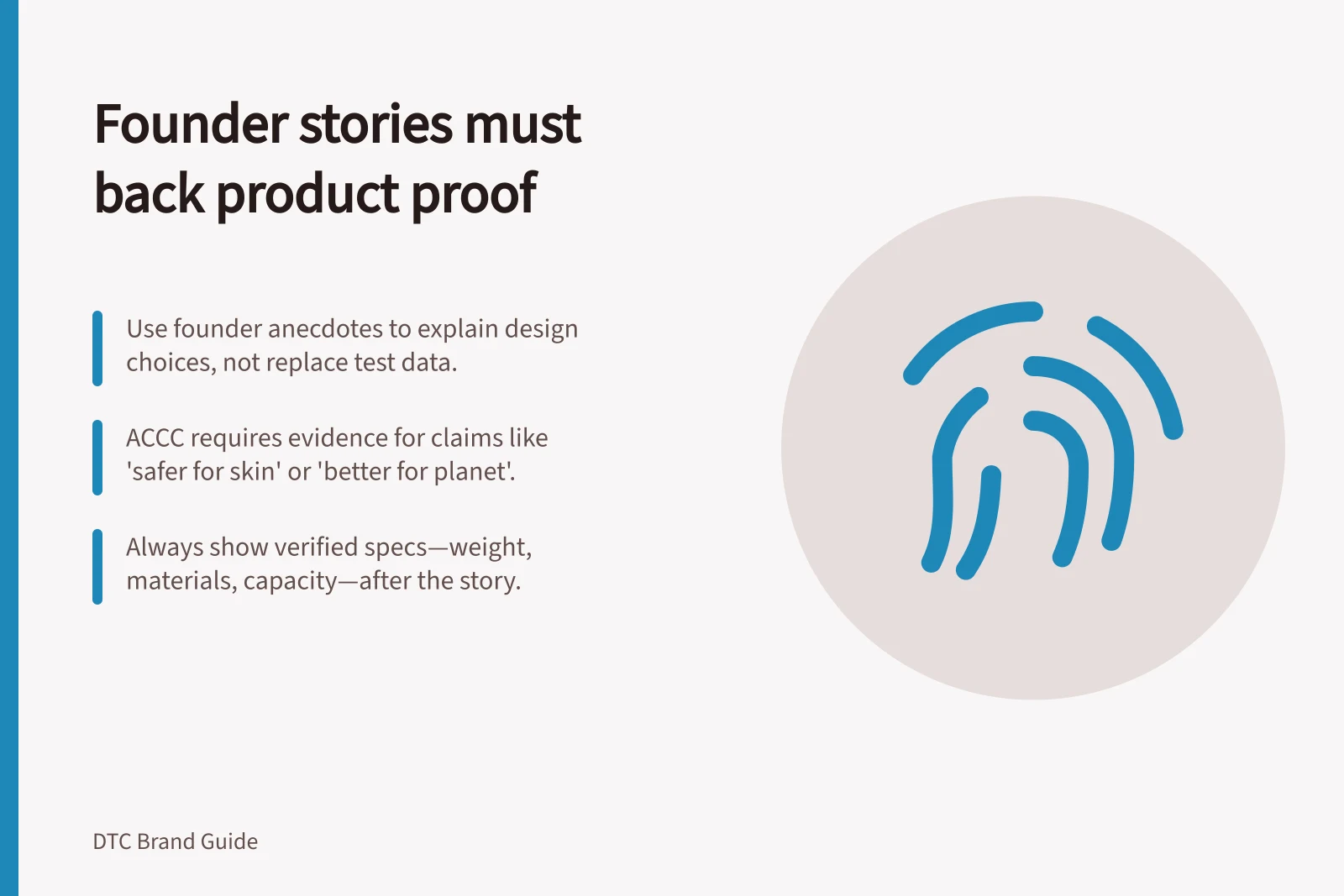
A founder story explains why a product exists. It is not evidence that the product performs as promised. Use the story to give context for a design decision, then show the material, specification or test that supports the buyer-facing claim.
Give the story a clear role
Choose one relevant moment: a problem the founder noticed, a constraint in the first prototype, or feedback that changed the finished item. Keep dates and personal details accurate. The story should answer “why was this feature chosen?” rather than ask the reader to trust the product because the founder cares deeply about it.
Follow the anecdote with the item itself. If the founder wanted a lighter travel bag, state the bag's weight and capacity if verified. If the brand prioritised a particular material, specify the component and composition. The narrative can make a fact memorable; it does not establish a fact that the business has not documented.
Check claims that sound like proof
Phrases such as “tested for years”, “made locally”, “safer for sensitive skin” or “better for the planet” need suitable records and careful scope. A personal experience is not a general test result. The ACCC says it can require businesses to back up product or service claims, and can investigate environmental or sustainability claims where rules may have been broken. Have the relevant product, supply or compliance owner review such statements before they become copy.
For a hypothetical example, the founder says a particular clasp solved a problem they had with another bag. That can be their account of the design process. The page still needs to show how the clasp works, what it holds and any usage limits. It should not turn one person's experience into a universal durability promise.
Checklist: Validating Claims in Founder Story Copy
- Is the claim supported by documented testing or data?Yes / No
- Does 'made locally' refer to a specific Australian manufacturing location and process?Yes / No
- Is 'better for the planet' backed by third-party certification or lifecycle analysis?Yes / No
- Has the product compliance owner reviewed the statement?Yes / No
Key Compliance Requirements from the ACCC
- Requirement for Claim Evidence
- Businesses must be able to substantiate claims
- Environmental Claim Scrutiny
- Sustainability claims subject to investigation if misleading
- Consumer Protection Standard
- False or misleading claims can result in penalties
Keep the purchase decision visible
Place the essential product facts where the shopper will find them even if they skip the story: dimensions, materials, included items, care and compatibility. Keep these details clear and easy to locate so shoppers can assess whether the product suits their needs. Let the founder story add meaning after those answers, not bury them.
Edit for proportion. If removing the founder section would leave the buyer unable to tell what the product is or whether it fits, the page needs more product information. If the story conflicts with the current specification after a redesign, revise or retire it.