Brand Positioning
Part of DTC product storytelling
Showing a product's intended use and limitations
A product page should tell a buyer what the item is designed to do and where that promise stops.
A product page should tell a buyer what the item is designed to do and where that promise stops. Clear limits help people choose the right product; they matter especially when a broad lifestyle phrase could imply more than the item delivers.
Describe a specific use
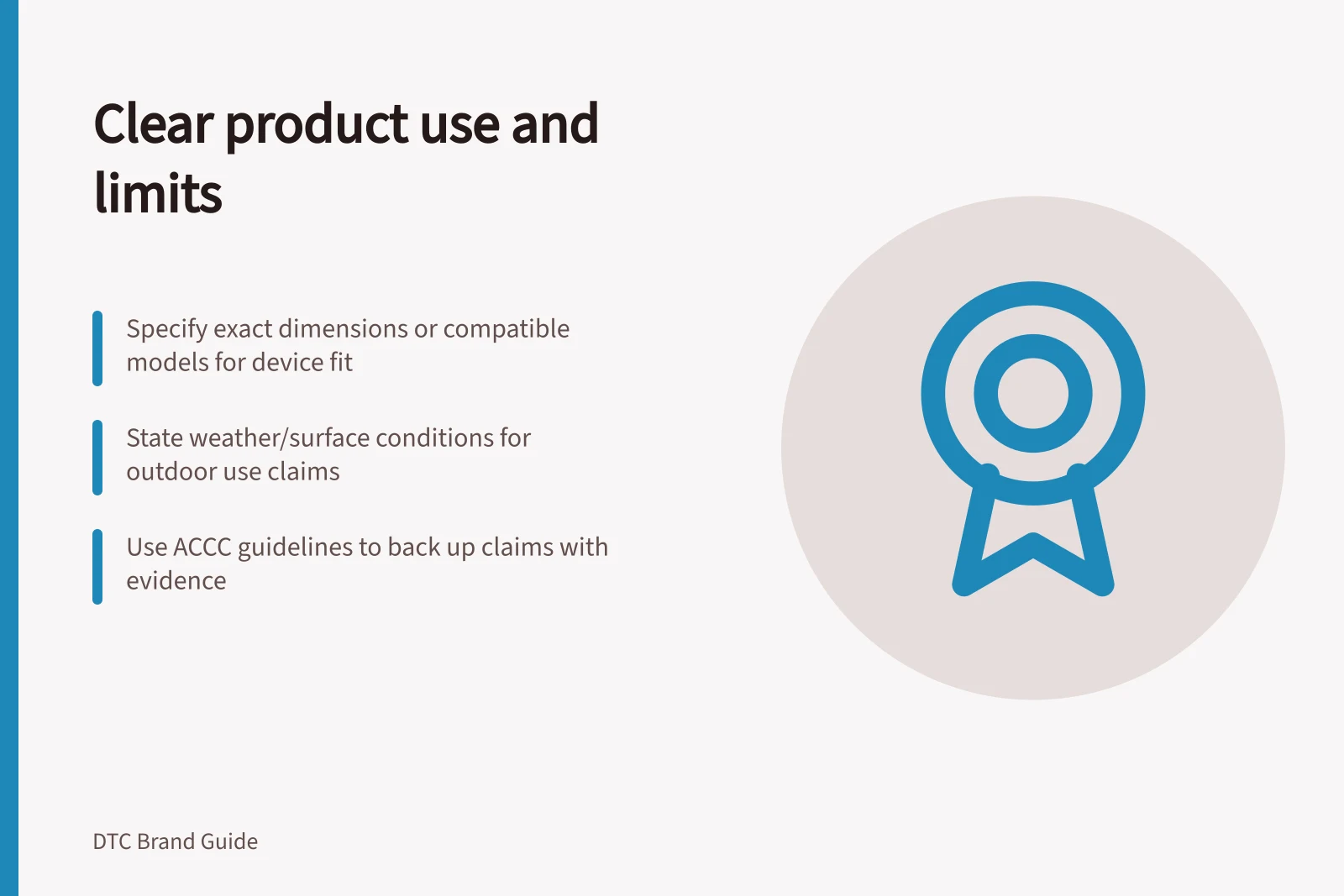
Name the task, setting and conditions. “Fits a 13-inch laptop” needs dimensions or compatible models if device sizes vary. “For outdoor use” may need a weather or surface condition.
“Suitable for daily use” is hard to assess without materials, care and expected load. Use the product record and any supported testing to decide how precise the claim can be.
Keep instructions and limitations near the relevant benefit. If an adhesive works on clean, smooth surfaces but not textured walls, state that beside the installation claim. If a refill is compatible only with certain models, put that information near the selector. A limitation hidden far below a broad promise may leave the wrong overall impression.
Distinguish fact from aspiration
A brand may have designed a product for frequent travel; that does not establish that it meets every airline requirement or survives every journey. A founder may have sought a lower-impact material; that does not prove the finished product is environmentally friendly.
In Australia, the ACCC can require businesses to back up claims they make about products or services, and can investigate if a business misleads consumers. Apply that discipline to promotional copy as well as specifications.
For a hypothetical example, a water-resistant pouch may protect contents from light splashes under specified conditions. Calling it waterproof would invite a different expectation unless the brand has evidence for that level of protection. The page should say what the testing or design actually supports, and what remains outside it.
ACCC enforcement actions related to misleading claims in Australia
- ACCC can require businesses to substantiate claims
- Under the Australian Consumer Law
- Consumer rights under Australian Consumer Law
- Products must be fit for purpose, safe, and match descriptions
Make the boundaries easy to scan
A compact “best for / check before buying” section can help when suitability is complex. Include dimensions, contents, required accessories, care and known incompatibilities. Avoid a long legal-sounding exclusion list that leaves the primary claim ambiguous. Rewrite the primary claim if it needs too many qualifications.
Ask support staff which misunderstandings produce returns or questions, then update the relevant product detail. Recheck the copy when components, suppliers or packaging change. A useful page makes the intended use plain enough that a customer can recognise both a fit and a mismatch before checkout.