Launch Operations
Part of DTC operating dashboards
Building a weekly trading review for a small DTC team
Prepare a short weekly trading pack, discuss material exceptions and leave with actions, owners and dates.
A small DTC team's weekly trading review should end with owned decisions, not a presentation of totals.
Prepare a consistent view of orders, available stock, retained sales, contribution and customer issues.
Use the meeting to resolve or assign exceptions that matter before the next review.
Prepare a short pack
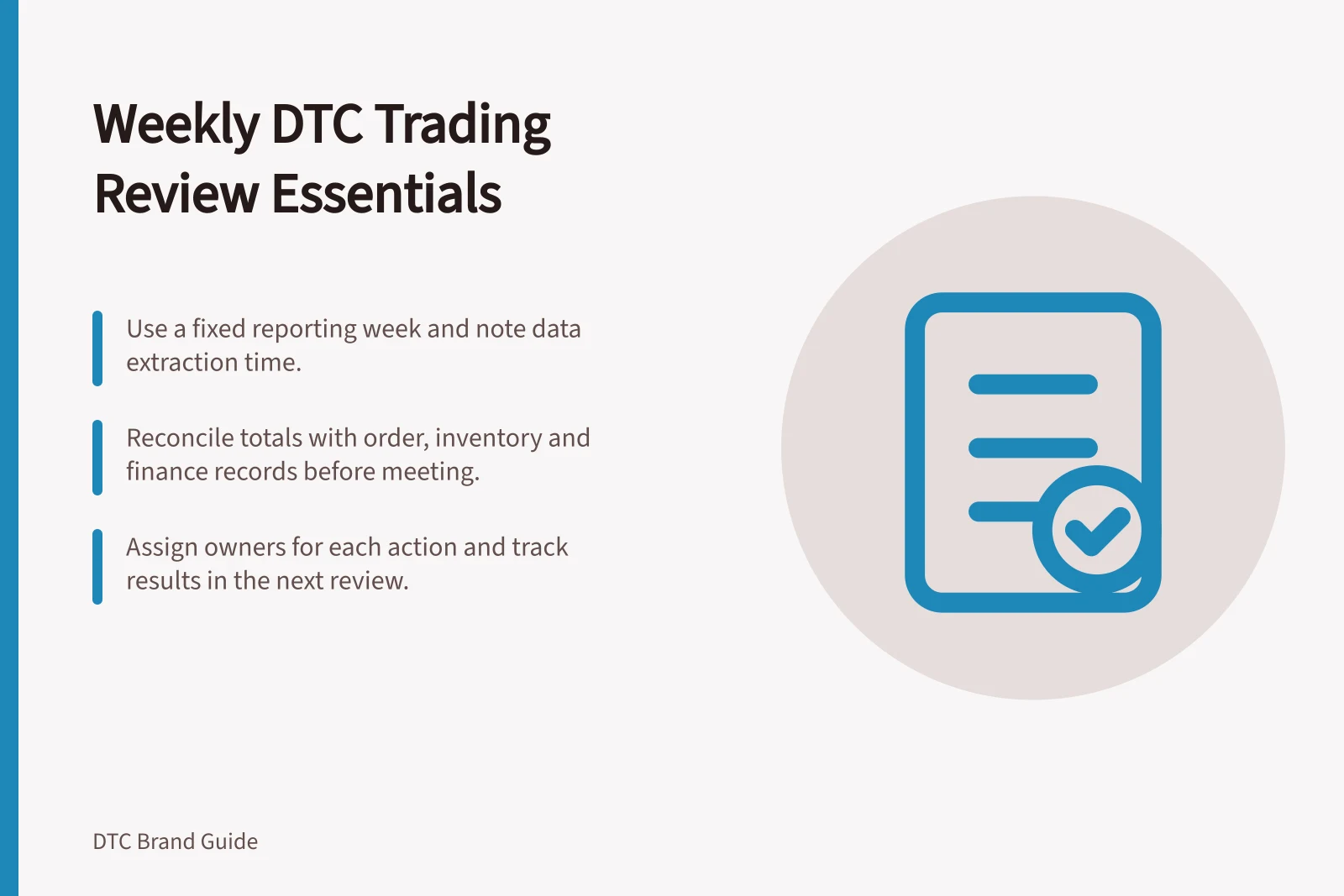
Choose a fixed reporting week and record when the data was extracted. Show a relevant comparison period, with promotions, stockouts, product changes and unusual orders noted. Use the same channel and GST basis in both periods. Label estimates and figures that have not reconciled.
| Section | Question to bring to the meeting |
|---|---|
| Orders and sales | What changed, and did discounts or reversals affect it? |
| Customer mix | What came from first and later orders under the agreed rules? |
| Products | Which available items gained or lost orders? |
| Stock | Which sellable variants and confirmed arrivals affect next week's promises? |
| Contribution | Which products or order types changed after relevant costs? |
| Customer issues | Which returns, delivery problems or support cases remain open? |
| Cash | Can the current forecast cover upcoming payments? |
Name an owner for each source. Reconcile material totals with order, inventory and finance records before the meeting, and mark what cannot yet be trusted.
Shopify sales reports can include pending or unpaid orders, and use defined terms such as gross sales and sales reversals. Gross sales is calculated before taxes, shipping, discounts and sales reversals, and sales reversals are order adjustments that result in negative monetary value. Shopify's on-hand inventory includes units unavailable for a new sale. The pack needs definitions that prevent either figure being misread.
Key Weekly Trading Metrics
- Gross Sales (excl. GST)
- See Shopify Sales Report
- On-Hand Inventory (sellable units)
- See Shopify Inventory States
- Cash Flow Forecast Coverage
- Check against upcoming payments
Week-on-Week Performance Comparison
- Orders
- Compare current week vs prior week (same GST basis)
- Contribution Margin
- After relevant costs (COGS, shipping, discounts)
- Stock Availability
- Sellable variants vs confirmed arrivals
Using Shopify Reports in Weekly Reviews
- Pros
- Consistent data format, built-in reconciliation tools, supports GST-based reporting
- Cons
- Includes pending/unpaid orders; on-hand inventory may include non-sellable units
Follow a decision sequence
Start with the previous action list. Close completed work and give unresolved actions a new owner or date where needed. Then ask where the material change occurred: order count, product mix, discounting, refunds, stock availability or serving cost. Open the relevant records for an exception before naming a cause.
Next, look at the coming week. Which variants may become unavailable? Which arrivals are confirmed? Can the team meet the availability and dispatch terms shown to customers?
If a reorder is proposed, state its quantity, payment date and effect on the cash forecast. Stock position and cash position answer different questions.
Finish with a short action record: what will be checked or changed, who owns it, by when, and what result will be reviewed. For example, comparing carrier invoices with the assumed delivery cost for a bulky variant is a specific investigation. It is not a finding that delivery cost caused a margin change.
Route urgent issues and follow up
Some investigations belong outside the meeting. An unexpected return pattern may need item inspection and customer accounts. A fall in first orders may require a check of stock and the purchase path.
Assign the work without treating a suspected cause as established. Move a possible safety issue or an individual customer's unresolved remedy to its responsible owner promptly rather than waiting for another trading meeting.
Save the data date, definitions, open questions and action list. Before closing, confirm any customer-facing promise that must change. At the next review, compare what happened with each decision's assumption.