Unit Economics
Part of DTC operating dashboards
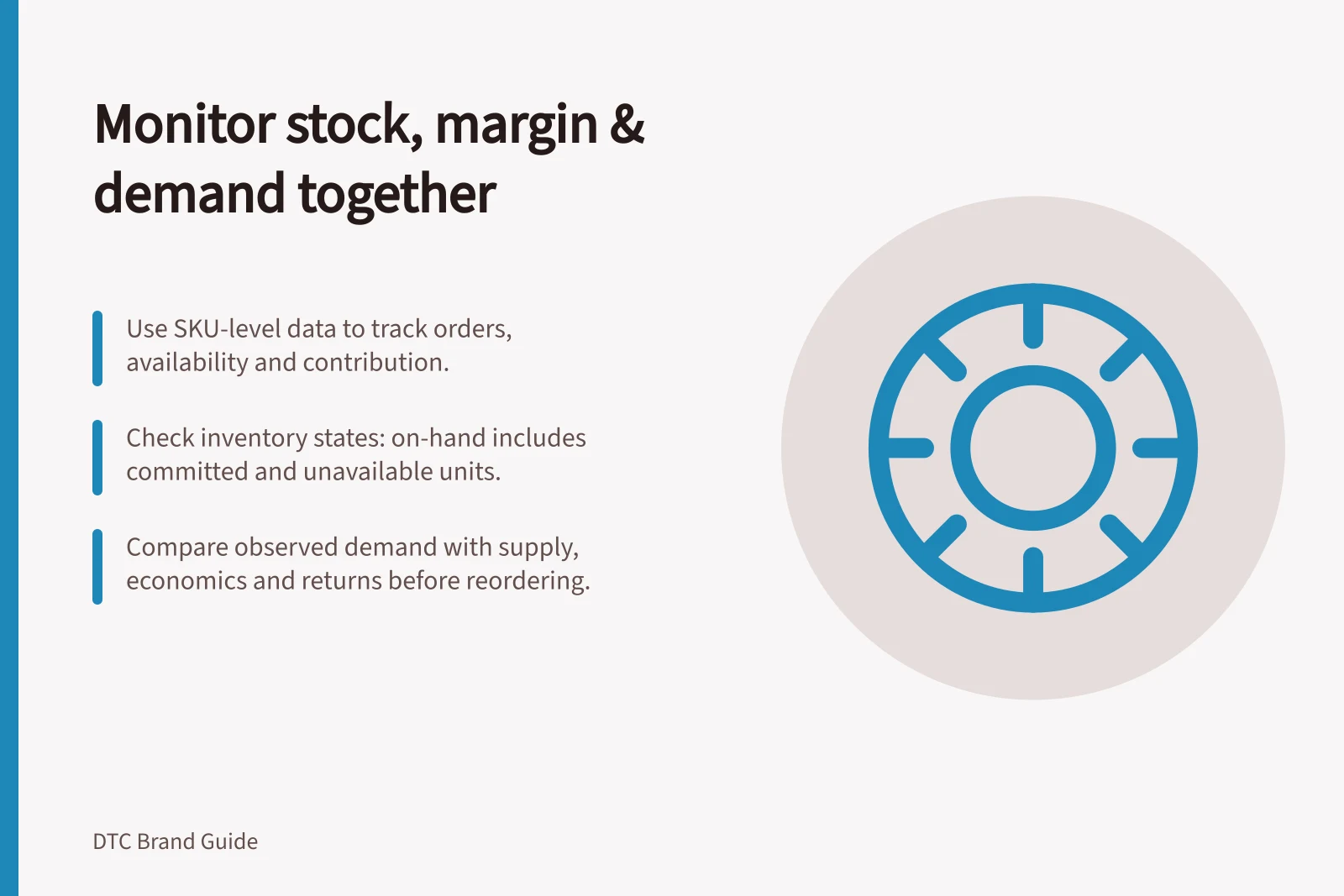
Monitoring stock, margin and customer demand together
Compare orders, sellable stock, returns and contribution for the same variant before reordering or changing an offer.
Review observed orders, sellable stock and contribution for the same variant and period before reordering or changing an offer. A fast seller may contribute little after costs; a slow seller may have been unavailable. Orders show purchases made, not all demand that might have existed while the item was out of stock.
Build a variant-level view
Use a stable SKU or variant identifier. Show units ordered and the period the item was available to buy, alongside available units, existing commitments and confirmed incoming quantity and date.
Add retained product revenue, recorded product cost and a contribution measure with its other costs stated. Keep refunds and physical returns visible separately.
| Signal | Record to use | Question to ask |
|---|---|---|
| Observed demand | Orders and units, with availability and promotion dates | Was the opportunity to buy comparable across periods? |
| Stock | Available quantity and commitments | What can be sold now? |
| Supply | Confirmed quantity and expected receipt date | Could replenishment arrive before stock runs short? |
| Economics | Retained revenue and relevant costs | Does another stock commitment make sense? |
| Returns | Refund, physical return and item condition | How much of the sale and stock value was retained? |
Views and enquiries can be useful interest signals, but they are not orders. If availability history is incomplete, mark it unknown rather than calculating a precise sales rate from it.
Check stock states
In Shopify, on-hand inventory includes available, committed and unavailable units; incoming units are separate. Those distinctions require inventory tracking and maintained records.
For another system, check its definitions and reservation process. Damaged units, accepted orders and components committed to bundles should not be treated as freely available for another sale.
Reconcile important discrepancies with a physical count or stocktake. If the count remains uncertain, record that uncertainty before approving a promotion or promising immediate dispatch.
Read the signals together
- Orders rising, available stock falling, contribution sound:confirm the supplier's date and the cash needed for a reorder. Check the availability promise shown to customers.
- Orders rising, contribution weak:inspect discounts, order mix, delivery charges and refunds before committing to a larger run.
- Orders falling while stock stayed available:examine the offer and customer questions before treating supply as the cause.
- Orders falling after stockouts:separate available days from unavailable days. The combined order count does not describe the same selling opportunity.
These are investigation prompts, not diagnoses. A campaign, a short period or one large order can distort a rate. Compare plausible demand during lead time with confirmed supply and the cash forecast, while keeping assumptions labelled.
Record the decision
For each variant needing attention, state the action, owner, deadline and evidence to revisit. A reorder decision should include quantity, terms and cash commitment.
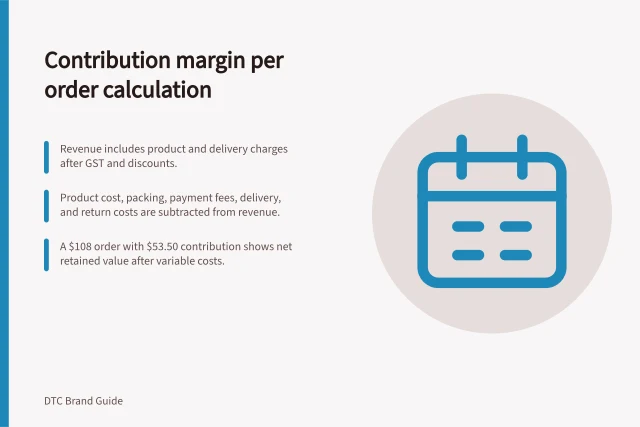
A pause should say what must be checked, such as a cost, returned-item condition or stock discrepancy. Detailed pricing, assortment and per-order calculations have separate purposes.