Unit Economics
Part of DTC pricing and promotional strategy
Reviewing discount dependence in a growing brand
Discount dependence appears when a brand must offer a code to achieve ordinary demand.
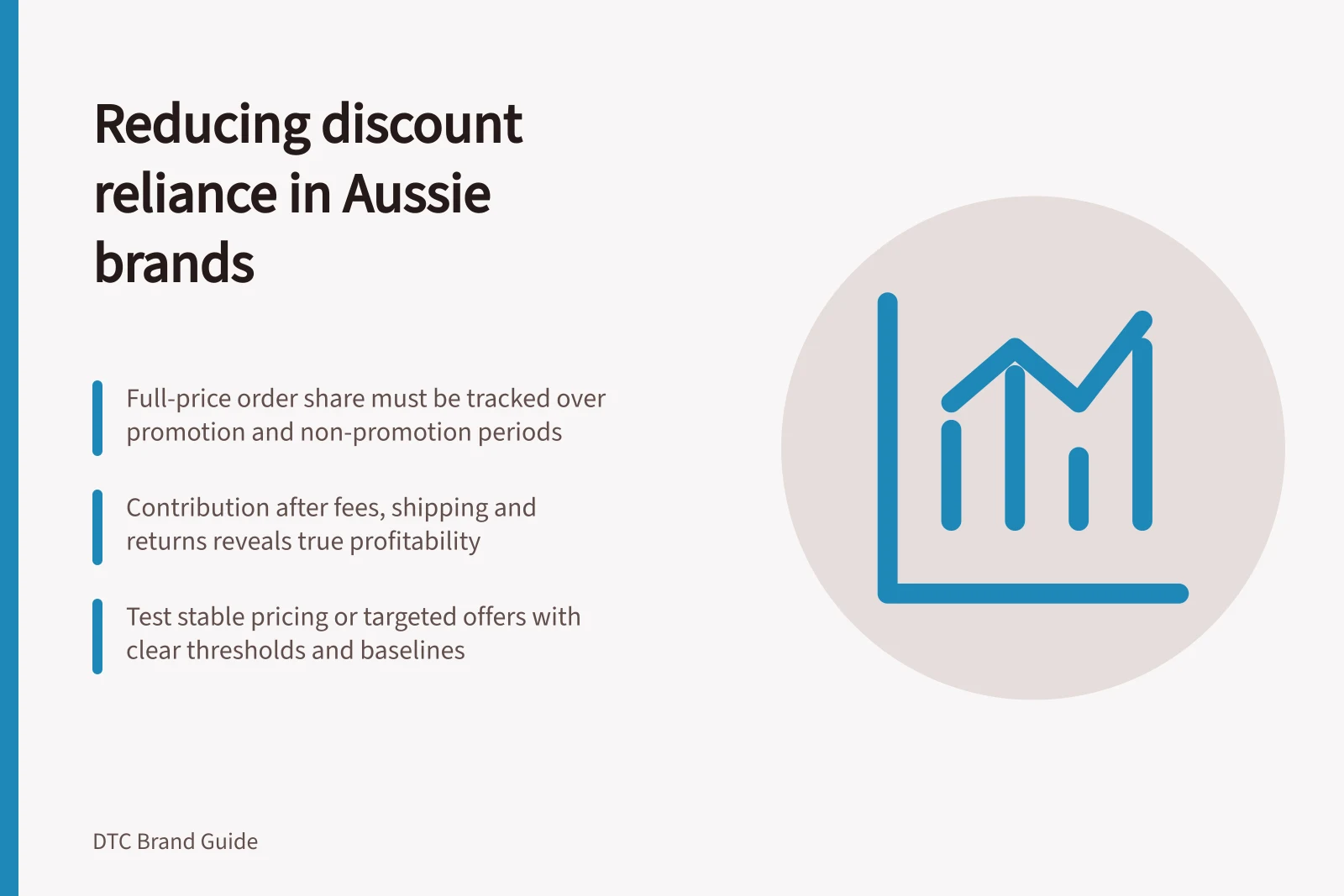
Discount dependence appears when a brand needs a code to generate ordinary demand, rather than simply choosing to promote. Review full-price order share, contribution after discounts, fees, shipping and returns, and how order activity changes around offers; judge the signals together against the brand’s own comparable periods.
Separate acquisition from habit
- Choose a review period that includes promotion and non-promotion days, then record full-price and discounted orders. Calculate full-price order share as full-price orders divided by all orders.
- Split full-price buying between new and returning customers, compare cohorts exposed to different offer patterns, and note the interval between promotions. Check whether orders bunch around sale dates; a rise in attributed sale orders may reflect purchases pulled forward from next week rather than additional demand.
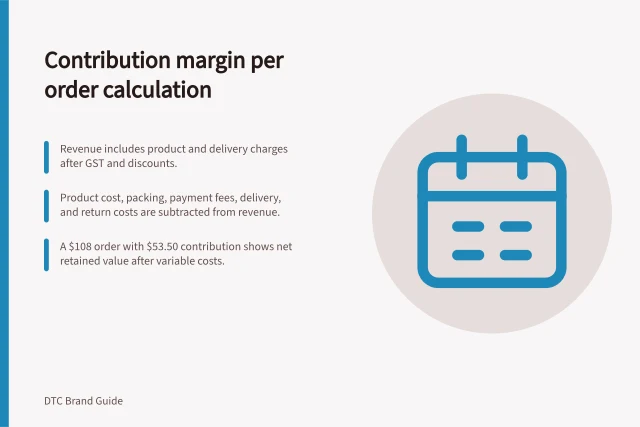
- Compare contribution for full-price and promoted orders after discounts, fees, shipping and returns, using the same basis. Read contribution alongside full-price share rather than treating revenue growth alone as evidence of healthier demand.
- Look for signals togetherordinary demand requiring a code, orders bunching around sale dates, changes in full-price buying across cohorts and differences in contribution. If one signal shifts, compare the other measures and look for repeat behaviour before deciding the brand is dependent on discounts.
Calculate full-price order share as orders sold without a discount divided by all orders in the same period. Compare full-price and promotional orders using the same contribution definition, after discounts, fees, shipping and returns.
Count promotion runs in each review period and note their dates. Look for orders bunching around sale dates or customers waiting for the next sale; a campaign count on its own does not establish dependence.
Compare like with like against the brand’s own prior periods. Dependence is more likely when full-price share weakens, promotional orders contribute less, and demand increasingly clusters around offers.
Promoting is not itself dependence. If full-price demand and contribution hold outside offers, and customers are not bunching purchases around sale dates or waiting for the next sale, the pattern is more consistent with ordinary promotion.
Steps to Evaluate Discount Dependence
- Review full-price order share over promotion and non-promotion periods
- Compare contribution after all costs (discounts, fees, shipping, returns)
- Check for order bunching around sale dates
- Assess customer behaviour across new and returning cohorts
- Ensure promotional claims are substantiated under ACCC guidelines
Reduce dependence deliberately
If orders bunch around sale dates, test a stable everyday price; if a specific need is clear, test a narrower promotion for that need. Record the reason, audience, period and decision threshold before the test, using the brand’s own baseline for full-price share and contribution.
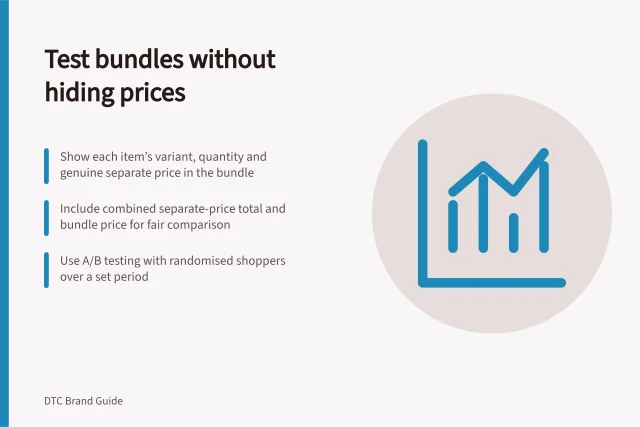
A bundle is an option only where products have genuine complementarity; keep each item’s price clear.
Avoid abrupt changes that confuse customers who were promised an offer.
Judge the change over enough time to see repeat behaviour. A one-week revenue dip may coexist with healthier margin, while a short-term lift may teach customers to wait for the next sale.
When making promotional claims, ensure you can back them up: the ACCC can require businesses to substantiate claims about their products or services and may investigate misleading or false claims.
Pros and Cons of Reducing Discount Dependence
- Pros
- Improved margin stability, stronger brand equity, reduced customer reliance on codes
- Cons
- Short-term revenue dip, risk of customer confusion if changes are abrupt