Unit Economics
DTC pricing and promotional strategy
Direct-to-consumer pricing should cover the economics of the product and make the value understandable without relying on a permanent sale.
Direct-to-consumer pricing should cover the economics of the product and make the value understandable without relying on a permanent sale. Set the base price from costs, positioning and demand evidence. Use promotions for a defined purpose, then measure contribution after the discount, delivery and returns.
Set pricing goals and research the market
The most common goal is profit, but others include becoming a market leader, increasing market share, improving brand reputation or increasing demand. Keep business plan and marketing plan goals aligned, and consider competitors' market position and your ability to supply.
Research the market by showing products to a sample of customers. Ask what they want, which features matter most, how much they spend on similar products and how many they might buy. Then test different price options to see what sells.
Compare with competitors but don't copy their prices exactly. Ensure your price covers costs and reflects full value. Compare product features, quality and customer service. Price sensitivity matters: some products see big demand changes if the price moves by a few dollars.
Build the base price honestly
Start with product cost, packaging, fulfilment, payment fees, expected returns and customer service. Add the margin needed to fund acquisition and future operations. Compare with alternatives a customer actually considers, while explaining the product's meaningful differences. A cost calculation gives a floor, not proof that customers will pay the proposed price. Observe conversion, complaints and repeat demand in a limited test.
Make any savings claim clear and substantiated.
A Melbourne homewares retailer repositioned from "affordable basics" to "considered essentials for modern living" and saw average transaction value rise 34% within six months, without changing products. The brand story, not the price, drove the increase.
Psychological pricing tactics
Charm pricing sets prices just below a round number, such as $19.99 instead of $20, exploiting the left-digit effect. Price anchoring sets an initial high price as a reference point, making other offerings appear more affordable. Decoy pricing introduces a third, less attractive option to steer consumers towards a preferred product, often a middle-tier subscription.
Consumers often equate price with quality, so a higher price can signal a superior product. Limited-time offers and prices ending in .99 can create a sense of urgency or fear of missing out, prompting impulse purchases.
Psychological Pricing Tactics vs. Base Price Strategy
- Charm Pricing ($19.99 vs $20)
- Exploits left-digit effect; increases perceived affordability
- Price Anchoring
- Sets a high reference price to make other options seem more reasonable
- Decoy Pricing
- Introduces a less attractive option to steer choice toward a preferred product
- Base Price Strategy
- Built on cost, margin, demand and value proposition; avoids discount dependence
Choose a promotion by job
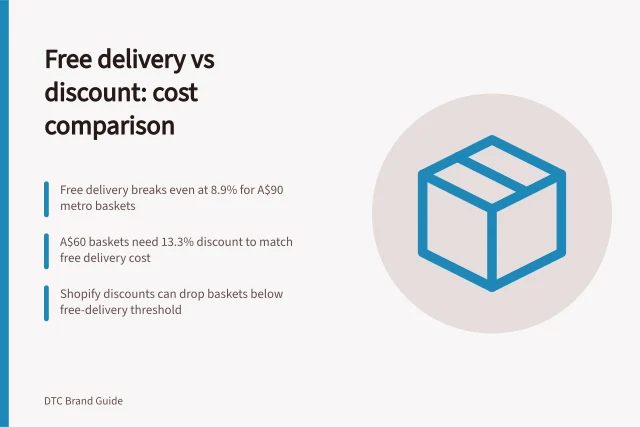
A bundle may help customers buy a compatible set, but show what it contains and what the items cost separately where that comparison is used. Free delivery and a percentage discount affect different baskets and costs. Calculate both against actual order size, shipping zone and margin before choosing a headline.
State eligibility, end date and exclusions clearly, and ensure any savings or price comparison is accurate and substantiated. Test the full mobile purchase path, not just the banner.
Consider dynamic pricing
Dynamic pricing adjusts prices in real-time based on demand, competitor pricing, time of day and customer demographics. It is also called surge pricing, personalised pricing and price discrimination. Airlines began using it in the 1980s after US deregulation. Accommodation, ecommerce, entertainment and ride-share now use it too. Advances in AI and technology let businesses move beyond traditional supply and demand.
Pricing expert Ron Wood, founder and director at Pricing Insight, says: "Dynamic pricing is all around us. We consume it almost every day in the form of airline tickets, hotels and Uber, but it also exists in our electricity market and more and more in retail markets." A dynamic model can increase discounts subtly until a purchase is triggered, calibrating supply and demand. It suits volatile input costs.
With access to extensive data, a retail business can adjust prices within seconds. Success means demand and supply throughputs are aligned without holding excess inventory that needs to be written off. But risks include privacy, fairness and customer trust, and it can raise price sensitivity. Dynamic pricing is legal in Australia if prices are clear, fair and not misleading.
Steps to Implement Dynamic Pricing Responsibly
- Assess Data ReadinessEnsure access to real-time demand, competitor pricing and customer behaviour data
- Define Fairness & Transparency RulesAvoid misleading prices; ensure all adjustments are clear and justifiable
- Test in Controlled EnvironmentsRun pilot programs with small segments before full rollout
- Monitor Customer Trust & FeedbackWatch for backlash related to perceived unfairness or privacy concerns
- Comply with ACCC GuidelinesPrices must be clear, fair and not misleading under Australian consumer law
Watch for discount dependence
Track full-price share, promotional share, contribution per order and repeat purchase by cohort. If customers increasingly wait for a code, a busy campaign calendar may be training the wrong behaviour. Test a narrower offer, improved product explanation or a stable price rather than escalating every sale. Do not treat attributed promotional orders as automatically incremental.
Key Metrics to Monitor for Pricing Health
- Full-Price Share
- Track percentage of sales at original price
- Promotional Share
- Percentage of orders using discounts or codes
- Contribution per Order
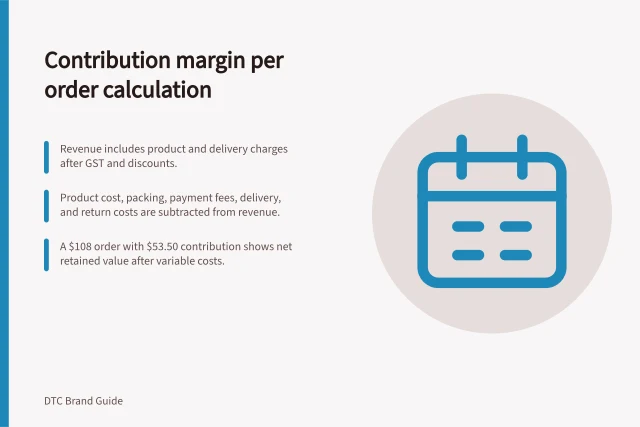
- Profit after discount, delivery and returns
- Repeat Purchase Rate by Cohort
- Measure retention across customer groups
Compliance for pricing and promotions
The ACCC educates businesses about consumer law and can investigate price displays that break the law. It may take compliance or enforcement action. It does not give legal advice or resolve individual disputes.
The ACCC can require businesses to back up claims about products or services. If a business misleads, the ACCC can investigate and may take action. Make sure any price or savings claims are clear and can be substantiated.
Compliance Checklist for Pricing & Promotions
- All savings claims are substantiatedProvide evidence for any 'was $X, now $Y' comparisons
- Eligibility, end dates and exclusions are clearly statedVisible on both web and mobile platforms
- No false or misleading price displaysAvoid hidden fees or confusing formatting
- Mobile purchase path tested fullyEnsure promotions work seamlessly across devices
- Pricing changes are transparent to customersAvoid surprise price hikes without notice
In this guide
- Testing bundles without hiding the price of individual itemsA bundle is useful when the items work together and the customer can understand what they are buying.
- Comparing free delivery with percentage discounts by basketFree delivery and a percentage discount can have the same headline appeal but different cost by basket, destination and product margin.
- Reviewing discount dependence in a growing brandDiscount dependence appears when a brand must offer a code to achieve ordinary demand.